Packing Tips From Professional Movers
The Golden Legacy Team · Family-Owned Bay Area Movers · May 19, 2026 · 7 min read
After two generations of loading trucks, we can tell within about ten seconds which boxes were packed well and which ones were thrown together the night before. The good news is that packing well is not a talent, it is a handful of small habits anyone can copy. Do these consistently and your things ride the truck the way we would want our own to, snug, protected, and easy to carry up a Bay Area staircase.
This is the rule people break the most, and it causes more broken boxes and sore backs than anything else. Books, tools, canned goods, and dishes go in small boxes. Pillows, bedding, lampshades, and clothes go in large ones. A big box filled with books becomes a two-person hazard that splits its own bottom; the same box filled with linens is easy to carry all day. If you can barely lift a box, it is too heavy, repack it.
Aim for about 50 pounds a box
A box you can pick up comfortably and carry across a room is a box that will not hurt anyone or blow out its bottom on the stairs. When in doubt, go smaller and add a box. Tape is cheaper than a dropped load.
A box needs to be full and firm so it holds its shape when boxes get stacked on top of it in the truck. A half-empty box collapses under weight; an overstuffed box that will not close flat becomes unstable in a stack. Fill to the top edge, use crushed packing paper or soft goods to eliminate empty pockets, and make sure the flaps close flush before you tape.
Good fillers you already own:
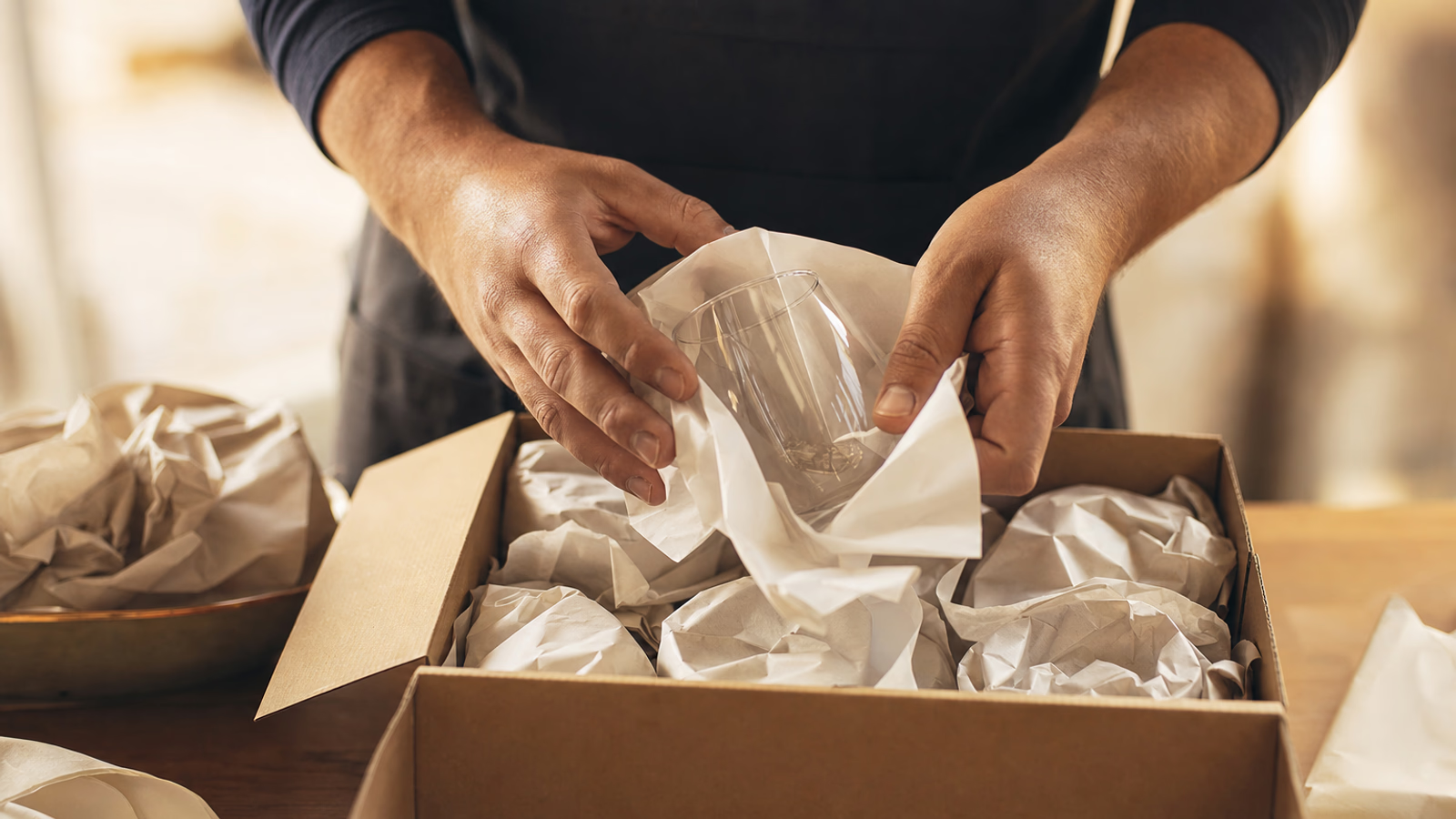
Dishes survive the drive when each one is wrapped on its own and the plates are stacked on their edges, standing up like records in a crate, not lying flat. Plates on edge distribute pressure and are far less likely to crack than a flat stack. Wrap glasses and stemware in plenty of paper, fill the hollow of each glass, and use a divided box for anything you truly care about. Label these boxes clearly.
Never leave a box unmarked as fragile
If a box holds glass, ceramics, electronics, or anything breakable, write FRAGILE on the top and all four sides, and note which way is up. A crew cannot protect what it cannot see is delicate. The two seconds it takes to label saves the heartbreak of unwrapping something in pieces.
The move is only half the job; the unpack is the other half, and a good label turns a mountain of identical boxes into an organized delivery. Write the destination room and a short note on the top and at least one side of every box, so it is readable no matter how the box is stacked. When boxes land in the right rooms, you unpack at your own pace instead of hunting for the coffee maker at midnight.
A labeling system that actually helps:
The items that trip people up, and how we deal with them:
Do not overpack dresser drawers
Light clothing can usually stay in dresser drawers for the move, which saves boxes. But empty out anything heavy or breakable first, a drawer full of books turns a dresser into an injury. When in doubt, ask your crew what they would like left in and what they would rather have out.
Packing well takes time, and time is exactly what most people are short on before a move. If your evenings are already full, or you have a kitchen full of stemware, artwork, or electronics you would rather not risk, our professional packing service brings the materials and the know-how to your door. We pack fragile and high-value items the way we would pack our own, and we can do a full-home pack or just the tricky rooms while you handle the simple boxes yourself.
We packed the easy stuff and had the team do the kitchen and the office. Every glass survived, every box was labeled, and unpacking was actually painless for once.
It depends on the size of your home and how much you own, but people almost always underestimate. A rough starting point is a mix weighted toward small and medium boxes, since those hold the heavy, dense items. It is better to have a few extra than to run out mid-pack, and unused boxes are easy to give away or return.
Begin about four weeks out with the rooms you rarely use, the garage, closets, and off-season items, and work toward the daily-use rooms so the kitchen and bathroom are last. Starting early is the single biggest thing that keeps packing from becoming a stressful all-nighter.
Clean newsprint or packing paper is best because newspaper ink can rub off onto dishes and light-colored items. If you do use newspaper, keep it away from anything the ink could stain, and wrap those items in paper towels or cloth instead.
Absolutely. Many families pack the straightforward boxes themselves and have us handle the kitchen, electronics, and anything fragile or valuable. Tell us which rooms you want covered and we will build the packing around what you actually need.
Rather not touch a single box?
Our packing crews bring the materials and pack your home the careful way. Ask for a free quote and tell us how much you would like us to handle.
Get a Free QuoteAbout the author
The Golden Legacy Team · Family-Owned Bay Area Movers
The Golden Legacy Team is a family-owned moving company based in Hayward, built on two generations of hands-on moving experience across the San Francisco Bay Area. We write these guides from the truck and the loading dock, turning what we have learned on thousands of Bay Area moves into plain, practical advice.
A calm, week-by-week plan for moving across the San Francisco Bay Area. Start eight weeks out and the whole thing turns from a scramble into a series of small, easy jobs. Here is the exact timeline we walk our own families through.
The cheapest, easiest box to move is the one you never pack. Sorting your belongings before a move lightens the load, lowers the cost, and means you unpack into a fresh start instead of a pile of stuff you forgot you owned. Here is a simple system for deciding what stays.
Two moves that look identical on paper can be priced very differently, and it is almost never a mystery once you know what movers actually measure. Here are the real factors behind a moving quote, so you can plan ahead and lower your own cost where it makes sense.